Fire Inspection & Protection Service Software
The Fire Protection Service module manages the work of fire protection system technicians. It enables fast periodic inspections (including full offline mode), instant generation of PDF protocols and XLSX spreadsheets, and automated tracking of upcoming inspection deadlines.
Why is it worth it?
We support the entire workflow from site arrival to report delivery and renewal alerts, saving your team’s time and ensuring the highest formal standard of generated documentation.
- 1. Performing Field Inspections
- 2. Generating PDF & XLSX Reports
- 3. Customer Retention & Continuity
- Additional Features
- Fast forms and batch asset entry – Predefined sub-protocol templates, device type autocompletion, and fast batch duplication of items while working on site.
- Checklist support and photo documentation – Convenient completion of inspection checklists with the ability to attach photos documenting equipment condition and defects.
- Rapid repeat inspections – Copying data from previous inspections drastically reduces on-site audit time during subsequent visits.
- One-click PDF protocols and Excel (XLSX) spreadsheets – Automatically assemble all active sub-protocols, tables, photos, and signatures into a clean PDF with a table of contents, plus export to XLSX.
- Smart completeness verification – Pre-generation checks evaluate all active sub-protocols and highlight any missing information, preventing incomplete reports from being sent to the client.
- Full template customization – Tailor reports and attachments to your brand identity (custom logo, headers, footers, and standard methodology clauses).
- Automated deadline notifications – The system monitors inspection expiration dates and reminds you of upcoming inspections in advance, securing repeat contracts ahead of the competition.
- Office verification & archiving – Office coordinators can review, edit, or enrich inspection data before final client delivery, and archive historical inspections.
- Guest Access (read-only) – Share selected facilities and inspection histories with property managers, investors, or fire safety auditors
- Offline Mode – Complete inspections and capture photos without signal in underground garages and boiler rooms
- (on request) Integrations with your IT systems and BI reports
- (on request) Migrations from current systems
- (on request) Integrations with hardware: e.g., printing maintenance tags, reading data from meters
How it works
A field technician activates the relevant sub-protocols for a building and records measurements and photos directly on their phone or tablet.
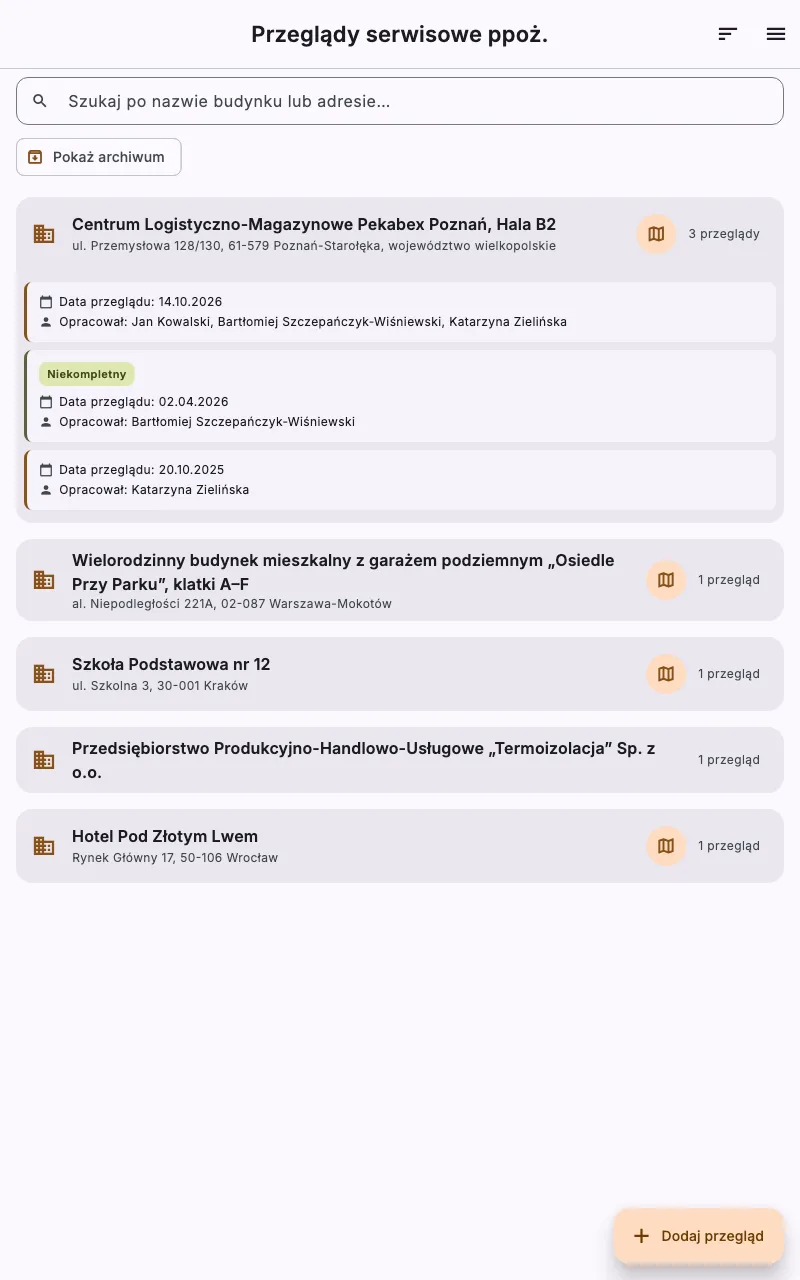
Service inspections list grouped by managed facilities.
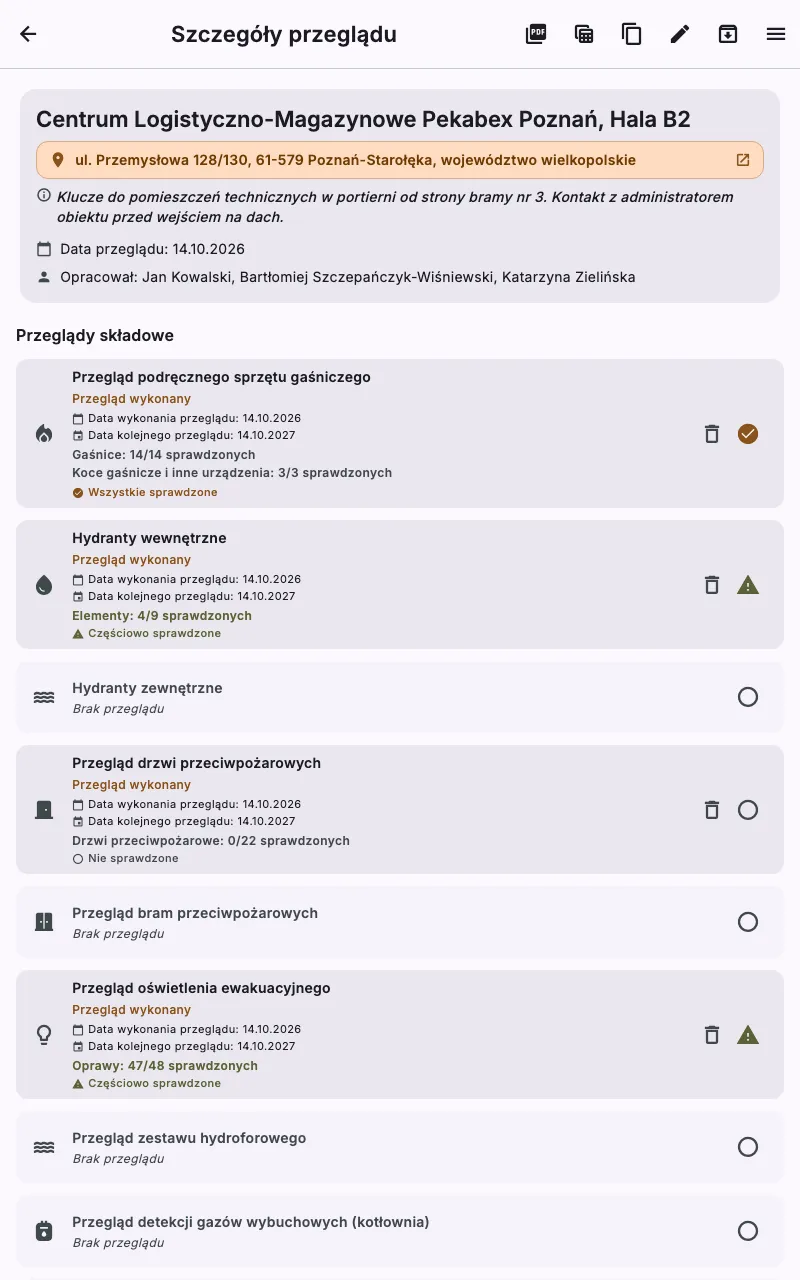
Inspection overview with active sub-protocols, completeness status, and PDF/XLSX export.
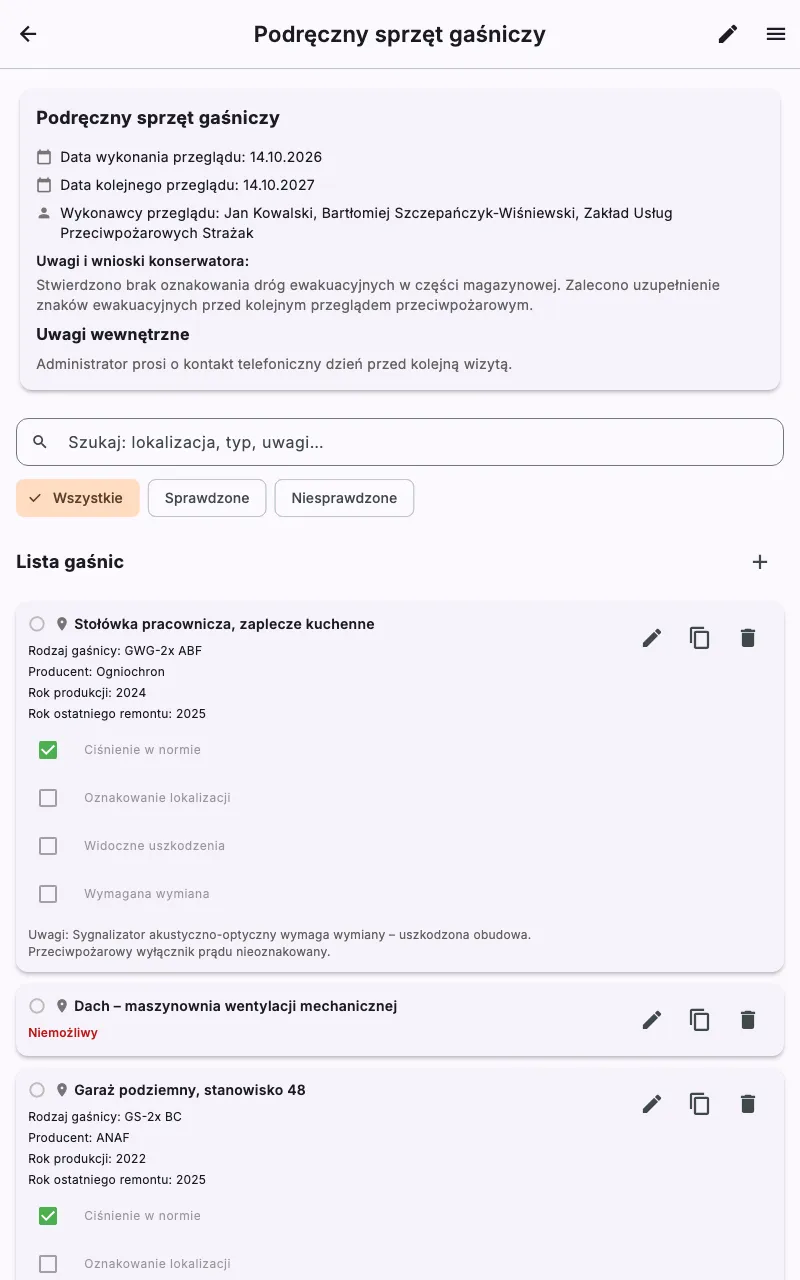
Handheld firefighting equipment inspection (fire extinguishers and fire blankets).
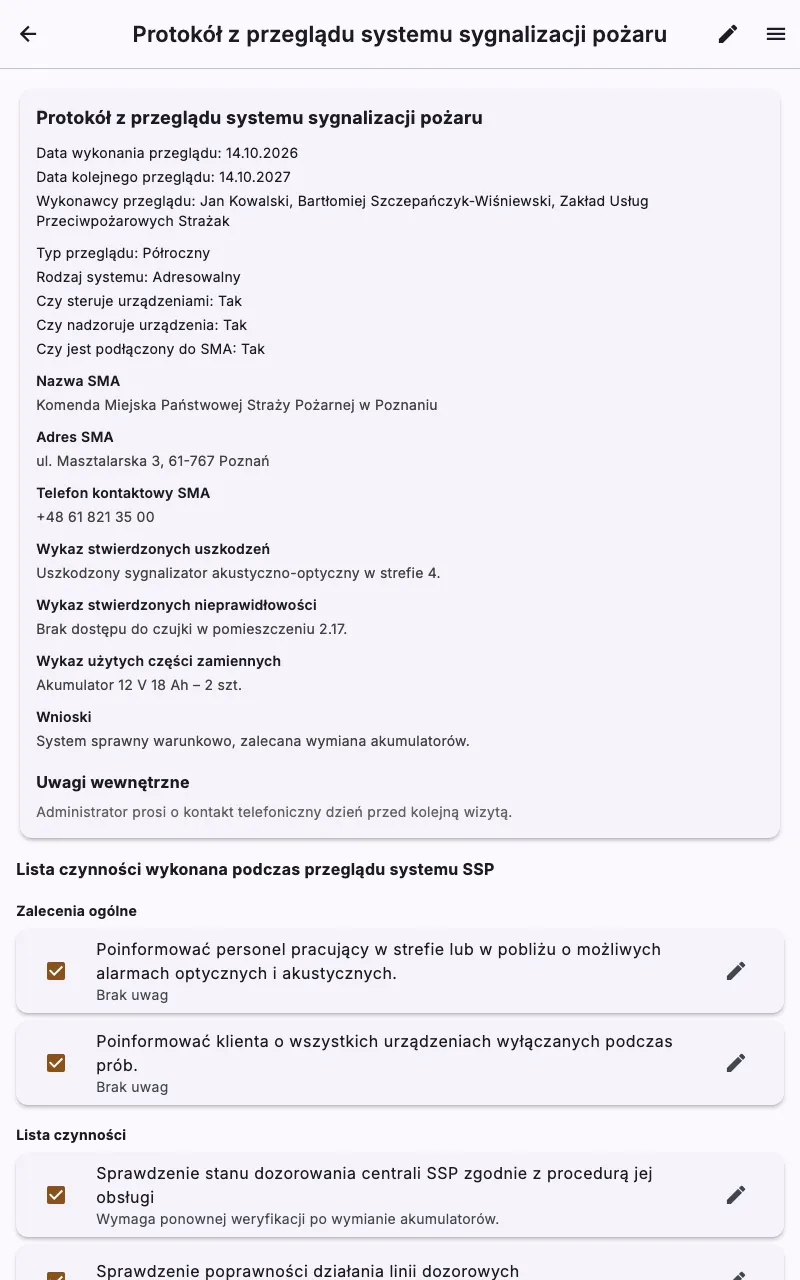
Detailed fire alarm system (FAS) inspection sub-protocol.
Office staff, after verification and adjustments, generate the PDF report and XLSX spreadsheet with a single click.
Info
Supported Inspection Types
Inventory of fire extinguishers, fire blankets (as well as hydropumps and fire beaters) with location marking, production and last service years for extinguishers, pressure checks, visible damage inspection, and service or replacement requirements.
Inventory and testing of standby batteries including application and nominal parameters, measured voltage and capacity, production date, and assessment of further operation eligibility.
Inventory of fire doors by floor level, manufacturer, and EI fire-resistance class, verification of signage, intumescent seals (including seal thickness), door closers, mechanical damage, electromagnetic holders, and proper latch, manual, and system release.
Inventory of pressure booster sets with location, location marking, application (hydrant, domestic, or sprinkler installation), and set type along with notes and photo documentation.
Inventory of gas detection control panels, buffer power supplies (with battery parameters and expiration dates), and detectors including calibration and replacement dates, detector activation tests, acoustic alarm tests, and main gas valve shut-off verification.
Inventory of gas detection control panels (with power supply and battery data) and linked detectors including calibration and replacement dates, detector activation tests, acoustic alarm tests, and main gas valve shut-off verification.
Inventory of control panels, detectors (including CO, LPG, NO₂), and warning signs/sounders, tracking next calibration dates and testing ventilation, acoustic, and optical alarm activation.
Verification of signage, PWP push-button operation, physical trip unit and indicator activation, power disconnection, systems retaining power, fuse location, and compliance with the design and fire scenario.
Inventory of emergency and directional luminaires, recording autonomy duration, measured value and measurement assessment, as well as luminaire battery nominal parameters and photo documentation.
Comprehensive inventory of internal and external hydrants, static and dynamic pressure and flow testing, hose pressure tests, and simultaneous water flow measurement from multiple hydrants.
Inventory of fire gates (manufacturer, serial number, control panel, EI fire-resistance class), testing of smoke detection, acoustic sounders, manual activation and proper operation, plus gate battery inspection.
Inspection of smoke control panels, manual call points, smoke detectors, smoke vents, electric actuators, and control lines.
Inventory of fire alarm control panels and system elements (detectors, MCPs, bases, sounders, batteries), inspection type, system kind, and fire brigade transmission (SMA) details along with a task checklist and photo documentation.
Detailed photo-documented checklist covering inspection of the DSO control panel, firefighter microphones, power supply, backup amplifier, speakers and speaker lines (including impedance and background noise level), and message audibility and intelligibility.
Combined inventory of control panels, smoke vents, and alarm pull boxes including inspection of alcohol ampoules (thermal triggers), CO₂ cartridges (weight and charge parameters), and mechanical condition (seals, hinge lubrication, dome).
Detailed system checklist with photo documentation and notes covering safety procedures, control panel logic, Hold/Stop buttons, nozzles, cylinders and piping, shut-off dampers, aspirating detection, and enclosure integrity assessment.
Inspection of alarm valves, water motor gongs, pressure switches, sprinkler heads, sectional shut-off valves, and detailed system checklist.
Inventory of fire shut-off dampers recording damper designation and supply voltage (24 V / 230 V), along with visual inspection, actuator electrical testing, and thermal fuse check with photo documentation.
Compliance
Our solution complies with applicable European and Polish safety regulations and standards:
- Ministry regulations on fire protection of buildings, facilities, and areas.
- Fire Protection Act and Technical Inspection Act.
- Relevant Polish and European Norms.
- Equipment manufacturer technical manuals (DTR).