An Integrated Approach to Enterprise Management System
- Wojciech Szczepanik
- Colly Technology Blog
- 04 Apr, 2025
Customer Needs
Speaking with our customers, we recognize many of their needs. We solve one of them – we help implement business processes in the field.
But what about the remaining areas?
- Customer Relationship Management (CRM),
- document and contract repository (DMS),
- invoicing and accounting (FK),
- project management (PM) and ongoing operational activities,
- …and many others?
Choosing Colly, one might be tempted to expect that the system will cover all these areas.
We believe, however, that this is not the right approach.
We don’t say this out of laziness. We are just as knowledgeable about enterprise management as we are about software design (that’s our other passion).
Anticipating questions – our recommended approach may ultimately prove cheaper than implementing one gigantic system!
Integrated Enterprise Management System
It’s worth clarifying a few key issues and introducing some basic concepts.
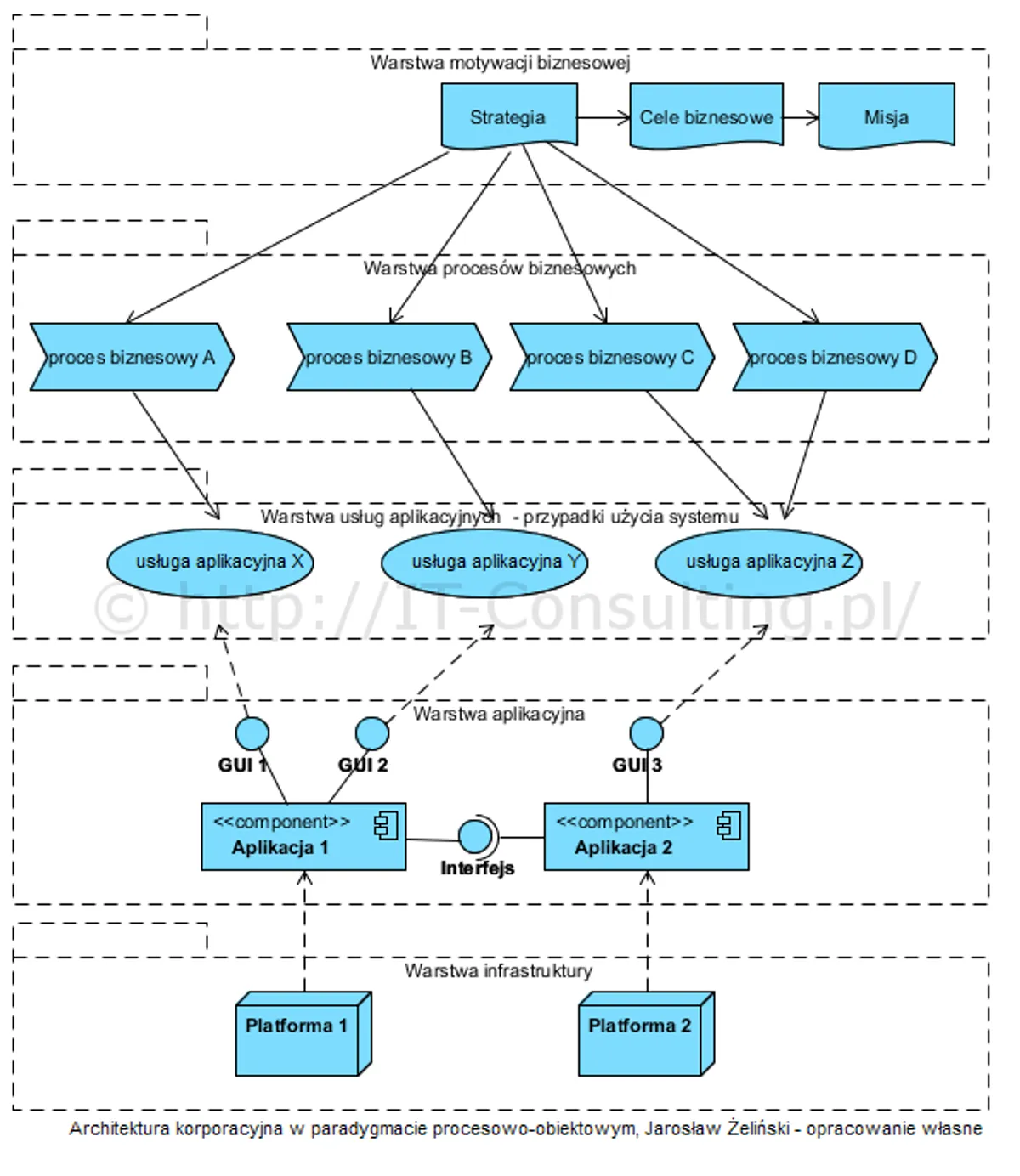
You run a company that has its mission (besides, of course, generating profit) – the company is engaged in, for example, fire protection, construction, trade, or another industry.
To achieve these goals, you perform specific activities – business processes. Your employees are responsible for them and benefit from a clear organizational structure.
Many business processes have been digitized. Invoices or warehouse documents (WZ, PZ) are no longer filled out manually. However, this doesn’t mean they’ve disappeared – rather, software has taken on much of the responsibility within specific application services (use cases).
If you’re interested in how software works under the hood, you’re entering its design area. As a non-technical person, you probably won’t deal with that. You care about use cases and their scenarios, not which programming language (e.g., PHP or Python) they’ll be executed in. That’s our role. We designed Colly precisely in this layer based on specific business processes.
Even in a small company, there can be a very large number of use cases (and corresponding processes). It’s extremely unlikely that you’ll find one product that will implement them all. Moreover – is it even worth looking for such a thing? If there was a ready-made system that perfectly fit everything, where would you build your competitive advantage and market differentiation?
Moving further – software must run somewhere. In this regard, you also make a decision: you can choose your own infrastructure (on-premise) or the cloud (where the responsibility for maintenance falls on the provider’s side).
All this makes up what is known as enterprise architecture. With such a model, you gain a complete map of your organization. Importantly – this is not a solution reserved only for large corporations.
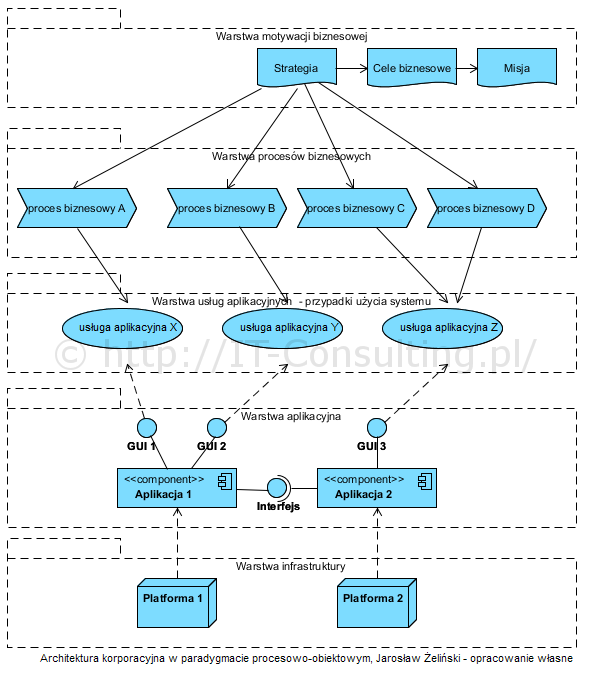
Figure 1. Enterprise architecture. Source: J. Żeliński, Architektura korporacyjna – opis struktury modeli i śladowania, IT-Consulting, 2020, https://it-consulting.pl/zamow/architektura-korporacyjna-opis-struktury-modeli-i-sladowania/ [access: 13.09.2026].
Colly as Part of an Integrated Management System
Since we recommend using multiple specialized applications in a company (preferably tailored to specific needs), a question arises: are we condemned to constantly switching between programs?
No! That’s exactly what integrations are for. Systems should communicate efficiently with each other through interfaces (APIs). They don’t need to use one common database (in the IT world, this is actually considered an anti-pattern used in monolithic ERP systems).
Colly’s development strategy emphasizes full support for integration. Each of our modules is designed with data exchange in mind. Note that not all applications need to communicate directly with Colly. In your company, there may be systems that exchange data only with each other. To manage everything, it’s worth having a model of your own company.
How Does Colly Work with Other Modules?
What might this look like in practice?
- CRM and Project Management: You choose a CRM system where you manage customer business data and contacts. As a service company, you work with client objects (buildings) – and this is exactly where the integration point with Colly lies. If you win a contract in your CRM and add building data, you don’t need to manually enter it into Colly. The object will appear in it automatically. Field employees don’t need access to the entire sales funnel – sales representatives have their tools, and technicians have theirs.
- RCP (Time Registration): Colly has a built-in time tracking module that allows you to bill hours spent on field operations. Data can be sent to your global HR systems.
- WMS (Warehouse Management): Colly is not a full-scale WMS warehouse. It gives field technicians only what’s necessary on the vehicle dashboard (e.g., available inventory), and passes the rest of the data to your main warehouse system. This way, you maintain order in your large warehouse handled by an ERP system and in the field.
- Other Modules: All other modules generate documents that are part of a larger business process. Thanks to integration, they will go directly where they’re needed.
But Others Promise to Do Everything for Us!
It’s worth asking yourself a few key questions and paying attention to the following issues:
- How can a vendor promise everything will work as you need without knowing your organization? Business analysis is used to find out what you need. Don’t skip this stage – remember that the program should be adapted to your processes, not your company to the rigid framework of the program.
- Customization vs. Configuration: A ready-made product and its functionality can be set within defined parameters (this is configuration). Vendors may additionally try to convince you that they will adapt the system perfectly to your company (this is what customization is). The main challenges of customization are:
- high costs due to individual development,
- intellectual property rights issues for the created code,
- long implementation time,
- risk of project failure without proper control.
Implementing one large ERP system with lots of customization across the entire company at once often ends in failure. That’s why a better choice is to use the incremental approach. Focus on one piece: implement it, integrate it, and then repeat this process with the next area.
Most application vendors prefer, for financial reasons, to:
- draw clients into expensive and endless customizations (although they can be avoided!),
- promise that their product will do absolutely everything best (which is practically impossible!),
- make the client company dependent on them (this is called vendor lock-in).
We believe that creating refined software and cooperation on partnership principles bring long-term benefits to all parties.